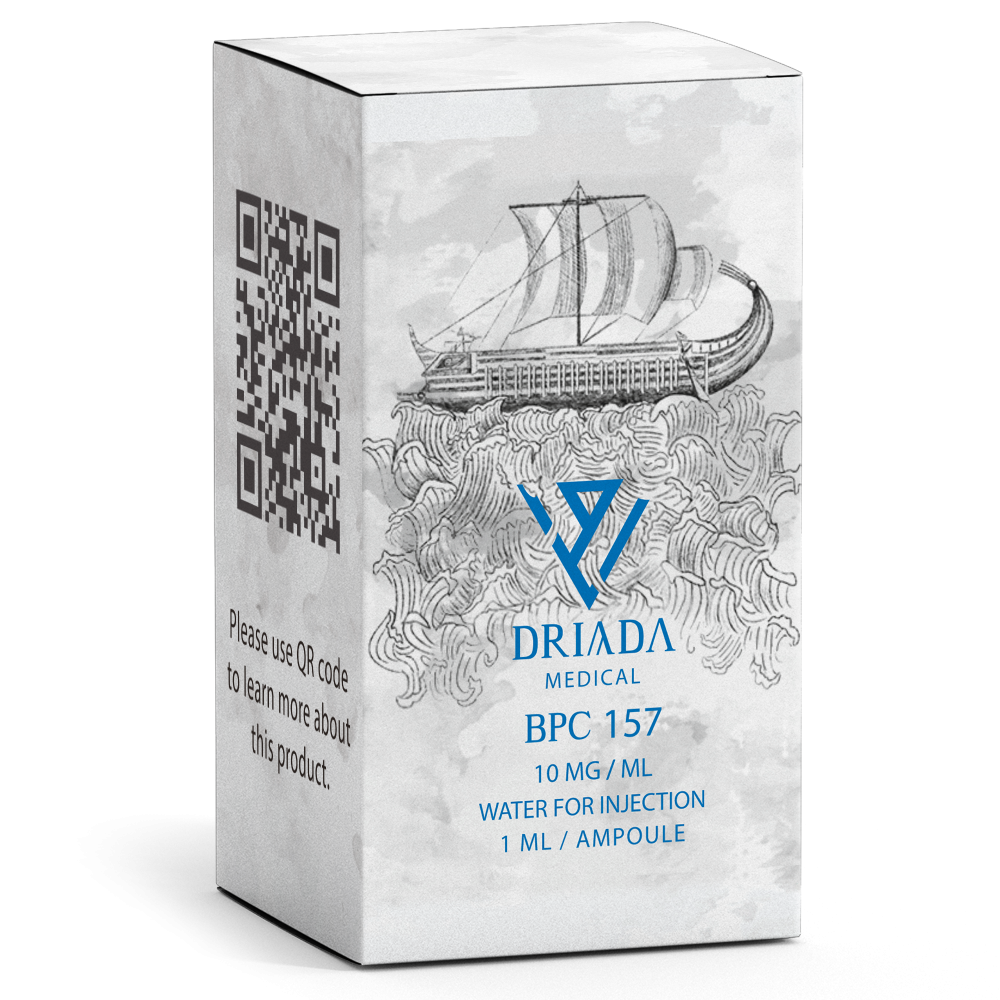
Description
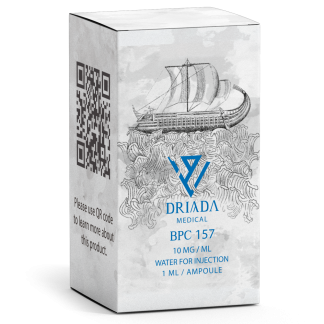
What is BPC-157?
BPC-157 (Body Protection Compound 157, laboratory code PL 14736) is a synthetic peptide consisting of 15 amino acids. BPC-157 has a wide range of organoprotective effects under stress conditions. Proteins and peptides of this type are released in the stomach along with gastric juice when exposed to stress factors such as injuries and various diseases, and act as regulators of the anti-ulcerative protective mechanisms of the digestive system.
Scientists have conducted numerous BPC-157 studies on animals, which showed that it has a protective effect that extends beyond the gastrointestinal tract: BPC-157 helps with stomach ulcers, intestinal damage such as fistulas and inflammatory diseases, healing of bones and joints, as well as injuries to organs such as the pancreas. Current studies show that BPC-157 influences several growth factors that are normally involved in angiogenesis (blood vessel growth) and other processes involved in regeneration after damage. The crucial importance of gastroprotection under the influence of BPC-157 in tissue inflammation, especially in the formation of stress-induced gastric and duodenal ulcers, is emphasized.
The pentadecapeptide BPC-157 has shown many potential health benefits. BPC-157 promotes the healing of various injuries and wounds and shows high cytoprotective activity. BPC-157 can prevent, mitigate, or reverse the effects of injuries, thereby counteracting both arterial and venous thrombosis. BPC-157 can balance collagen synthesis and influence hepatic fibrosis in chronic liver damage. The effects of BPC-157 also weaken fibrosis of the skin, muscles, tendons, and ligaments, reduce scarring, and promote functional recovery. There are indications that BPC-157 produces NO under ex vivo conditions. BPC-157 has positive effects in animals with stroke, schizophrenia, depression, and spinal cord injuries within the gut-brain axis. In rat studies, persistent damage to brain neurons as well as memory and coordination disorders were eliminated after the carotid artery occlusion experiment.
Researchers have repeatedly shown that BPC-157 has an enormous number of positive effects throughout the body. Theoretically, BPC-157 could impair viral replication in the early stages of an infection, improve the integrity of blood vessels, and suppress the onset of virus-induced cytokine cascades.
Human clinical studies are required to confirm the potential therapeutic application of BPC-157 in patients, as most studies on the efficacy of the drug have been conducted on animals. Below you will find the list of all potentially beneficial effects of this peptide.
Mechanism of action
BPC-157 interacts directly with the nitric oxide (NO) pathway to regulate blood vessel function, as well as to stimulate key growth factors. The main mechanism of NO-mediated wound healing is the formation of new blood vessels in a process known as angiogenic repair. This means that more oxygen and energy can be delivered to the damaged site, and recovery occurs faster.
BPC-157 is responsible for stimulating the production of angiogenic cytokines such as VEGF, TGF-b, and FGF. However, it does much more than these growth factors alone, and its full regenerative potential is exceptional. It also upregulates the anti-inflammatory gene transcription factor and growth receptors, leading to an improved systemic recovery response. BPC-157 also stimulates the growth and proliferation of fibroblasts, which are crucial for the formation of a structural protein in your skin, bones, and connective tissue called collagen.
During animal experiments, BPC-157 has shown wound healing and cytoprotective activity. BPC-157 facilitates wound healing through accelerated angiogenesis (the process of forming new blood vessels). The wound healing effect affects damage to muscles and tendons, affected vessels of the appendix, spinal cord injuries, portal vein fibrosis, and hemorrhagic cystitis.
Healing of tendons and ligaments
Due to limited blood supply, the spontaneous healing of tendons and ligaments is naturally poor. These soft tissues are very frequently the target of BPC-157 studies. In 2003, it was found that, compared to the severely impaired healing in control rats, systemic administration of BPC-157 significantly improved the recovery of rats. This was confirmed biochemically, microscopically, and macroscopically. Biomechanically, healed tendons (within 14 days) showed increased load to tendon failure and higher functionality. Microscopic analyses showed more mononuclear cells, fewer granulocytes, an increase in fibroblasts, and good formation of reticulin and collagen fibers. Macroscopically, the defects were smaller in size and depth, and the entirety of the tendon subsequently recovered. Similar results were also shown in 2010 in rat models examining the healing of the medial collateral ligament after a surgical cut. The results showed that BPC-157 significantly accelerated the growth of tendon explants; furthermore, the migration and proliferation rate of tendon fibroblasts in vitro is increased.
Healing of skeletal muscle
The positive therapeutic effect of BPC-157 has also been applied to models of traumatic and systemic muscle injuries. In 2006, it was reported that the use of BPC-157 promoted the healing of injured muscles. More importantly, healing continued over a longer period (72 hours), while functional recovery was maintained. We continued the comparison of the efficacy of systemic (intraperitoneal) and topical treatment (in the form of a thin layer of cream) for 14 days in the continued gastrocnemius muscle in rats. BPC-157 significantly improved healing macroscopically, microscopically, and functionally, with reduced muscle proteolysis. The authors concluded that BPC-157 accelerates the healing of skeletal muscle after an injury. The paper proposed BPC-157 as an effective agent that can improve the healing of the calf muscle after an injury.
In addition to muscle damage caused by direct injuries, a number of studies have shown that BPC-157 may have the ability to restore systemic muscle diseases in response to induced nerve, electrolyte disturbances, and/or skeletal muscle breakdown, as noted in a 2019 review. Since systemic muscle pain can be due to infections, autoimmune diseases, illnesses, or medication side effects, they are considered more serious than stress- or exercise-related muscle injuries.
Long-term therapeutic effect on injuries
In a 2017 study, the authors wanted to investigate the pro-angiogenic and therapeutic effects of BPC-157. BPC-157 has been shown to increase vascular density and accelerate the restoration of blood flow in ischemic muscle, indicating a stimulating effect on angiogenesis.
Skin wounds
A balanced modulating effect on the healing of skin lesions was noted in a 1997 article. This study found that the combined collagen/inflammatory cell/angiogenesis triad was improved and progressed faster with BPC-157 administration. Subsequent studies in the early 2000s were conducted on burns covering 20% of the total body surface on the backs of mice. Accelerated burn healing in treated mice was observed with topically (as a cream) or systemically (intravenously) administered BPC-157.
The peptide also attenuated burn stress lesions of the stomach. Another positive result is seen in animals with severe burns treated with corticosteroids. At the same time, the BPC-157 pentadecapeptide healed burn wounds and counteracted corticosteroids, which worsen burn healing. The administration of BPC-157 healed skin damage caused by alkali burns in 2015. Similar results (i.e., skin wound repair and maturation of granulation tissue), which were strongly facilitated by BPC-157, were achieved in small pigs.
Fistula healing
BPC-157 has successfully treated various fistulas (review 2020): anastomoses between two defects in the respective tissues (e.g., esophagus and skin, stomach and skin, duodenum and skin, colon and skin, bladder and rectum; intestine and vagina).
Therapy of circulatory disorders
The therapy of circulatory disorders with BPC-157 can be considered as a realization of its wound healing effect. The modulating effect in wound healing can be even more interesting and effective, as BPC-157 reduces bleeding in wounds. Wound healing includes vasoconstriction, primary and secondary thrombus formation, and thrombus dissolution. This is seen together with the maintenance of the endothelium as a continuation of the cytoprotective ability, along with evidence that BPC-157 can counteract both developing and already formed arterial and venous thromboses. In studies, direct vein injuries, thromboses, thrombocytopenia, and prolonged bleeding were negated with this peptide.
BPC-157 and brain injuries
A 2020 review came to the conclusion that BPC-157 has a direct therapeutic effect in post-stroke rats (i.e., it counteracts damage caused by ischemia/reperfusion of the hippocampus). Furthermore, BPC-157 contributed to complete functional recovery. BPC-157 also counteracts various encephalopathies. BPC-157 treatment regimens significantly mitigate brain damage caused by traumatic brain injuries (weight loss); there is an improvement in the early outcome and minimal delayed mortality within the first 24 hours after injury in mice. Furthermore, BPC-157 promoted the recovery from severe muscle weakness that occurs with brain damage. These effects have the potential to be a new therapeutic solution for the treatment of strokes, which has a specific positive effect on the central nervous system.
BPC-157 and ethanol (alcohol)
In acute ethanol intoxication, mice show persistent anesthesia, hypothermia, increased blood levels of ethanol, and a 25% mortality rate over a 90-minute rise period. BPC-157, whether administered before or after ethanol intoxication, rapidly reverses the above negative effects. Furthermore, BPC-157 reduces withdrawal symptoms (hangover) after abrupt cessation of ethanol use (continuous consumption of 20% alcohol for 13 days). BPC-157 maintains vascular integrity by counteracting the penetration of alcohol into the tissue. Researchers have repeatedly shown that BPC-157 strongly counteracts the effects of alcohol injected into the rat’s stomach, namely rapid endothelial damage.
BPC-157 as a potential treatment for COVID-19
COVID-19 is primarily considered a thrombotic and vascular disease that attacks endothelial cells throughout the body and can cause central vascular dysfunction. This explains the complications and multiple organ failure seen in patients with COVID-19, including acute respiratory distress syndrome, cardiovascular complications, liver damage, and neurological damage. Therefore, the management of comorbidities and potential organ damage is crucial for the clinical management of patients. BPC-157, based mainly on data from animal models, could improve the clinical management of COVID-19 through anti-inflammatory, cytoprotective, and endothelioprotective effects in various organ systems across various animal species. As a result, the discussion of its use as a potential prophylactic and adjuvant treatment is of crucial importance. The hypothetical applicability of BPC-157 in COVID-19 is considered in the article. The authors concluded that clinical studies on BPC-157 are necessary.
Biological properties
- Promotes the healing of various tissues, including skin, mucous membranes, cornea, muscles, tendons, ligaments, and bones
- Increases the expression of the growth hormone receptor, which increases the effectiveness of growth hormone in tendon healing
- Promotes the growth of new blood vessels
- Therapeutic effect in various gastrointestinal diseases
- Protects the endothelium and prevents the formation of scar tissue
- Positive effect on blood vessels
- Improved body response to viruses
- Increases the anti-inflammatory properties of the body
- Positive effect on the central nervous system
- Can reduce the gastrointestinal toxicities of other medications
Side effects
Despite the abundance of experimental data confirming the activity and safety of BPC-157 in vivo and in vitro, only a few clinical studies on the peptide are known. Scientific studies and clinical trials have so far shown no significant side effects, adverse, or toxic effects when examining the BPC-157 peptide. However, it is possible that further research in the future could uncover risk factors that are currently unknown.
- There may be redness and pain at the injection site
- It is important to note that the peptide has the ability to form new blood vessels, which can negatively affect metastases. Cancer cells can receive more blood using newly formed vessels.
Use
BPC-157 injections are administered subcutaneously or intramuscularly. The injection is given once daily. The dosage of the medication is 5-10 mcg/1 kg of body weight. The duration of the cycle is on average 4-6 weeks or based on the achieved effect. Please note that the application scheme is individual and depends on the injury, the load, and the age of the athlete.
Combination with other medication
BPC-157 will have a synergistic effect for healing tendon injuries with medications such as TB-500, as well as anabolic steroids for healing muscle tissue injuries due to the synergistic effect. As a result of research, it was found that the growth hormone receptor is one of the most strongly regulated genes in tendon fibroblasts by BPC-157. BPC-157 increased the expression of the growth hormone receptor in tendon fibroblasts. The addition of growth hormone to tendon fibroblasts treated with BPC-157 increased cell proliferation in a dose- and time-dependent manner. In summary, you can say that the BPC-157-induced increase in the growth hormone receptor in tendon fibroblasts can enhance the proliferation-stimulating effect of growth hormone and promote tendon healing. Based on these studies, we can conclude that the use of BPC-157 together with growth hormone will have a much greater clinical effect.
How to prepare a solution
To prepare an injection solution, take a syringe, which already contains a diluent, and inject it into a vial containing a lyophilized powder. Tilt the vial so that the needle touches the vial wall. Avoid injecting the diluent directly into the lyophilized powder. The solvent should slowly flow down the wall of the bottle (do not fill it all at once and take your time).
As soon as the entire diluent has been placed in the peptide bottle, mix carefully (but do not shake) until the lyophilized powder has dissolved and a clear liquid remains. Now the medication is ready for use.
Never mix a peptide with another in the same syringe. This carries risks that fragile peptide molecules are destroyed.
Application
- The injection can be administered subcutaneously or intramuscularly, depending on personal preference.
Storage
- The resulting solution can be stored in the refrigerator at a temperature of 2-8°C for about 21 days. The storage time increases if the solution was prepared with bacteriostatic water.