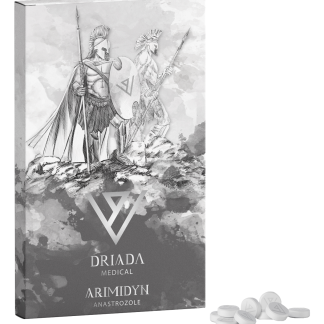
Description
What is Modafinil?
Modafinil is one of the most popular drugs in the group of nootropics, taken to improve cognitive functions and increase brain performance. It has gained significant popularity among people whose work involves mental tasks or requires increased concentration. Especially among students, this drug is very popular, as well as among IT specialists and long-haul truck drivers.
Modafinil is a selective alpha-1-adrenergic agonist with a mainly central effect. It acts as a psychostimulant and improves cognitive performance. Originally developed for the treatment of narcolepsy, Modafinil became the first medication in its class to promote wakefulness, and was approved in the USA in 1998. During studies, patients taking modafinil remained awake for 28 hours and were able to maintain their attention and vigilance. Media reports suggest that the drug is actively used by the military of the United States and the United Kingdom to increase performance, especially among pilots. Modafinil reduces the need for sleep and can be used effectively to increase attention and concentration.
According to the generally accepted classification, Modafinil is both a nootropic and a eugeroic. Eugeroics are substances that have a stimulating effect, reduce drowsiness, and promote wakefulness. A typical example of a eugeroic is caffeine. Modafinil belongs to the same group and activates neurotransmitters that are responsible for wakefulness. In addition, Modafinil improves cognitive functions and shows nootropic properties, making it useful for improving memory and concentration. Due to its long half-life, it can offer significant advantages by increasing tolerance to the harmful effects of prolonged mental exertion.
Purpose of application
The use of Modafinil serves various purposes, both in medical institutions and beyond. Below are the most popular reasons for using Modafinil:
Medical application
Modafinil is used in medicine to treat sleepiness associated with narcolepsy. It is approved for the treatment of sleep disorders associated with shift work and excessive daytime sleepiness. In addition, Modafinil is approved by regulatory authorities in some countries to treat cases of idiopathic hypersomnia (pathological daytime fatigue with an unknown cause).
Off-label medical application
Modafinil is also used as a relatively safe psychostimulant off-label. For example, it is used to treat lethargy and fatigue associated with depression, fibromyalgia, chronic fatigue syndrome, myotonic dystrophy, and opioid-induced sleepiness. It improves subjective mood and can be used to treat jet lag.
Modafinil can also be an effective and well-tolerated treatment for patients with seasonal affective disorder. Some doctors may also prescribe it for people with “night owl” syndrome (delayed sleep phase syndrome). There are indications that modafinil, when used alone, is effective in certain subgroups of people with depersonalization-derealization syndrome. The subgroups that most often respond to Modafinil are people with attention deficits, low nervous system activity, and increased sleepiness.
Non-medical use for performance enhancement
By influencing brain cells, Modafinil improves cognitive functions, leading to increased work capacity, activity, alertness, focus, and concentration. As a result, many consider it a “smart drug” or cognitive enhancer. Professionals doing intellectual work, such as programmers, gamers, and students, use modafinil to increase productivity. It is widely used off-label to suppress the need for sleep, while also improving short-term memory after sleep deprivation.
Military use: The armed forces of several countries have shown interest in Modafinil as an alternative to amphetamines, medications traditionally used in combat situations where soldiers are exposed to sleep deprivation, for example during extended missions. In the US military, Modafinil is approved for use in various air force operations and is being examined for other purposes. Studies have shown that when modafinil is administered in divided doses of 100 mg, it can maintain flight control accuracy in sleep-deprived F-117 pilots at 27% above baseline for up to 37 hours without significant side effects.
Space missions: Astronauts on long missions aboard the International Space Station have used Modafinil to optimize performance during phases of fatigue. It helps with circadian rhythm disorders and poor sleep quality experienced by astronauts. Similarly, during risky, large, and prolonged law enforcement operations in Maryland, USA, field doctors dispense 200 mg of Modafinil to law enforcement officers once a day to improve attention, concentration, and functionality under conditions of limited recovery.
Cocaine dependency
Modafinil is being examined as a possible treatment for cocaine addiction due to several reasons related to the biochemical mechanisms affecting both medications, and observations that the clinical effect of Modafinil is sometimes opposite to the symptoms of cocaine withdrawal. In a double-blind study with Modafinil for people seeking treatment for cocaine dependency, significant improvements were found in some parameters, such as the maximum number of successive days without cocaine consumption; however, no statistically significant effect on the change rate in the percentage of cocaine-free days was determined.
Weight loss
Studies on Modafinil, including in people with normal weight, show that it suppresses appetite and leads to weight loss. All Modafinil studies in the Medline database that lasted longer than a month and reported changes in weight show that Modafinil users lose weight compared to placebo. A 2008 small study of people with simulated shift work showed a reduction in calorie consumption of 18% at 200 mg of Modafinil per day and a reduction of around 38% at 400 mg per day.
Mode of action
Despite intensive research on the interaction of Modafinil with various neurotransmitters, the exact mechanism or combination of mechanisms remains unclear. Scientists are still researching how Modafinil influences the human body. It is known that the drug influences various neurotransmitters in the brain that are responsible for wakefulness, concentration, and focus. It is believed that the drug influences several different pathways in the brain, creating a stimulating effect and improving cognitive functions. Modafinil probably increases the release of monoamines, especially noradrenaline and dopamine, in synaptic clefts, similar to other stimulants.
Modafinil affects the brain by activating different biochemical processes. It stimulates the production of dopamine and related neurotransmitters, indirectly increasing brain activity and improving cognitive functions (executive functions). These changes enable people to cope with mental tasks more effectively, make quick decisions, and maintain concentration over longer periods of time. Because of its ability to increase dopamine levels in the brain, modafinil is prescribed to people with attention deficit hyperactivity disorder (ADHD) who have critically low dopamine levels, which leads to concentration problems and attention deficits.
During clinical studies, it was found that Modafinil has neuroprotective and antioxidant properties. It helps increase cortical creatine levels and reduce oxidative processes in the brain, which also contributes to improved concentration. In addition, it suppresses the activity of pathways responsible for fatigue and actively activates substances that promote wakefulness.
In addition, Modafinil increases histamine levels in the hypothalamus, prompting some researchers to consider it more of a “wakefulness-promoting” agent than a classic amphetamine-like stimulant.
Studies show that modafinil has a “low potential for serious abuse” and “does not cause addiction in first-time users”. The combined effect of modafinil on both catecholamine and histamine pathways reduces its potential for abuse compared to traditional stimulants, while at the same time maintaining its effectiveness as a performance-enhancing medication.
Numerous studies show an increase in monoamine levels, especially dopamine in the striatum and nucleus accumbens, noradrenaline in the hypothalamus and ventrolateral preoptic nucleus, and serotonin in the amygdala and frontal cortex. Modafinil activates glutamatergic and inhibits the transmission of GABAergic nerve signals.
Effects
- Improves memory
- Increases attention and cognitive function
- Reduces the need for sleep
- Improves mood and motivation
- Reduces appetite and calorie consumption by 18%
- Reduces daytime fatigue
Side effects
There is a risk of neurological, cardiovascular, and allergic side effects, although these side effects usually occur most frequently in the first two weeks of taking the drug. The side effects include back pain, headache, nausea, anxiety, nasal congestion, diarrhea, dizziness, digestive disorders, insomnia, severe allergic reactions, hives, formation of ulcers in the mouth, formation of blisters or peeling of the skin, swelling of the face, eyes, lips, tongue, legs, or throat, swallowing and breathing difficulties, fever, shortness of breath, yellowing of the skin and eyes, dark urine, and increased blood pressure.
Half-life
The bioavailability of Modafinil is over 80%. The average maximum concentration is reached about 2-3 hours after administration. The simultaneous administration of food slows down absorption; however, it does not affect the total area under the pharmacokinetic curve (“concentration-time”). The half-life is usually between 10 and 15 hours and can vary depending on the genotype of the cytochrome P450 enzymes and liver and kidney function.
Contraindications
- Hypersensitivity to the medication
- History of cardiovascular diseases, especially during the use of other stimulants or in the case of liver cirrhosis
- Heart diseases, in particular, left ventricular hypertrophy or mitral valve prolapse
How to use it
People with a lack of sleep receive this drug to maintain wakefulness during the day. Healthy people take it to improve motivation and cognitive skills. This drug helps people with hyperactivity to focus more easily on complex tasks. In addition, Modafinil enables a person to stay awake and concentrated over longer periods, making it easier to execute demanding tasks. This effect continues as long as there is a sufficient concentration of modafinil in the body.
Dosages
A single dose of 200 mg is recommended in the morning, although clinical study data indicate that twice-daily administration (in the morning and at noon) of 200 mg is more effective. A single dose of 400 mg does not significantly increase effectiveness compared to the 200 mg dose.
For the treatment of drowsiness associated with shift work, a single dose of 200 mg of the drug is recommended one hour before the shift begins. Good effects can also be achieved with a single dose of 300 mg. Persons who are particularly sensitive to the drug can feel a significant effect with a dosage of 100 mg.
In all cases, the daily dosage should not exceed 400 mg. Taking the drug in the second half of the day is not recommended, since Modafinil is slowly excreted from the body (half-life 12-15 hours) and can disturb normal nighttime sleep. In general, the dosage recommendations are sufficient for 100 to 400 mg per day, divided into 1-2 doses.
The recommended initial dosage of the drug is 50-100 mg, which is gradually increased to 200 mg or more until the desired effect can be felt.
Safe doses
Some people can achieve the desired effects with a daily intake of 50 mg of the active ingredient, while others may need higher doses to achieve a similar effect. Therefore, it is impossible to definitively determine which dosage is more appropriate, as this depends on individual body features.
The standard initial dosage of the drug is 50 mg per day. Then the dose can be gradually increased until the desired effect is achieved. In most cases, Modafinil is taken in a dosage of 200 mg per day. The maximum permissible dosage is 400 mg per day.
If you plan to take Modafinil daily over a longer period of time, it is better to stick to the lower end of the dosage range. This reduces the risk of unwanted side effects. Dosages close to the maximum permissible limit are more suitable for single use if it is important to achieve a strong effect immediately. In addition, higher doses of Modafinil may be required for people with an accelerated metabolism.
Overdose
Symptoms of an overdose are only possible when a person exceeds the maximum daily dose of the drug, i.e., takes more than 400 mg of Modafinil. In the event of an excessively high dose of modafinil, symptoms can occur which are similar to those of side effects. These can include fear, restlessness, confusion, sleep disorders, diarrhea, tachycardia, hallucinations, nausea, tremors, chest pain, and other symptoms.
Lack of effects
Different people can experience the effects of Modafinil differently. It is very rare, but it happens that the drug has no effect at all. For example, some people, especially those who have just started taking the medication or who have been taking it for a long time in high doses, may not feel any desired effects.
Can Modafinil be taken daily?
The daily intake of the drug is indicated for the treatment of narcolepsy, sleep apnea, ADHD, multiple sclerosis, and some other chronic diseases. The frequency and duration of modafinil intake depend directly on the desired goal. Persons to whom this drug was prescribed by a doctor must strictly adhere to the doses given by the doctor.
However, the optimal dosage for increasing productivity involves 2-4 intakes per week. For some people, taking Modafinil 1-2 times a month as a “rescue” may be sufficient if they have to cope with urgent tasks.
If you take Modafinil daily to increase productivity and improve concentration, it is important to comply with certain rules. In particular, it should be understood that the drug is never completely excreted from the body when used daily. Therefore, it is necessary during this time to forego alcohol and cigarettes. It is also important to know that a withdrawal syndrome can occur after stopping the medication.
The frequency and duration of modafinil intake depend directly on the desired goal. Persons to whom this drug was prescribed by a doctor must strictly adhere to the doses given by the doctor. Persons who independently decided to take modafinil to increase activity should take into account the special features of their own body and pay attention to their body’s reactions to the medication. Some people take tablets every day to get the necessary energy kick, while others may only take the medication in special situations, e.g., before an exam or during preparation for particularly demanding projects.
The best advice in this case is to take the drug only when it is really necessary to improve cognitive functions or maintain concentration over a longer period of time.
Influence on sleep
When modafinil is taken in small doses, nighttime sleep is not impaired. After the phase of wakefulness, a sleep duration of 7-8 hours is recommended. However, it should be observed that the half-life of this drug is 12-15 hours, and this value can vary depending on the individual’s metabolic rate. This means that a certain amount of modafinil can remain in the blood at the end of the day. Therefore, Modafinil in doses of up to 400 mg should only be taken in the morning in order not to disturb the regular daily routine and avoid insomnia.
How long can you stay awake with Modafinil?
If the dosage is calculated correctly, wakefulness can be maintained for 22 hours or longer when taking modafinil. In some cases, the effect of this strong eugeroic can last up to 40 hours. This makes it extremely popular with people whose work requires prolonged activity and concentration. For example, it can be an advantage for long-distance drivers who have to remain attentive for many hours.
Modafinil and withdrawal syndrome
When Modafinil is taken over a longer period of time and in high doses, symptoms of a withdrawal syndrome can occur after stopping. The longer a person has taken the tablets, the more intensive these symptoms can be. To make the process of stopping Modafinil less painful, it is recommended to gradually reduce the dosage of the drug. After stopping, problems with concentration, fatigue, depression, sleepiness, shortness of breath, and weakness can occur. These symptoms, in particular strong weakness, are most clearly noticeable in the first week after stopping the drug. Persons who take modafinil in small doses, however, usually experience no withdrawal symptoms if they stop taking it.
Dependency
Despite some biochemical similarities with addictive stimulants, Modafinil has significantly lower addiction potential. In other words, the risk of dependency on modafinil is minimal, which distinguishes it from other stimulants such as amphetamines.
Combination with other medication
Below are some potential combinations of Modafinil with other medications. It is important to understand that Modafinil is a CNS stimulant. Even if there is no specific information about the combination of modafinil with other stimulants, their effects can be potentiated, which can lead to various side effects.
Contraceptives
Modafinil can reduce the effectiveness of some contraceptives, which can lead to unplanned pregnancies.
Yohimbine
The combination of modafinil with yohimbine can lead to a dangerous increase in heart rate and blood pressure.
Caffeine
If you decide to take caffeine and modafinil at the same time, it is important to know that both substances have a strong influence on the nervous and cardiovascular systems. Therefore, the daily intake of Modafinil and caffeine in people with minor cardiovascular or nervous problems may be unsafe.
Dopamine receptor antagonist
While the simultaneous administration of amphetamines with dopamine receptor antagonists reduces the stimulating effect of amphetamines, the combination of dopamine receptor antagonists and Modafinil does not completely reduce modafinil’s wakefulness effects.
Modafinil and alcohol
The simultaneous use of modafinil and alcohol can be dangerous. This is because, from a biochemical perspective, these substances cause opposing reactions in the brain. Alcohol increases the activity of gamma-aminobutyric acid (GABA) and reduces glutamate activity. Modafinil, on the other hand, inhibits GABA and accelerates glutamate synthesis. In addition, alcohol inhibits many processes in the brain, while Modafinil stimulates brain activity. The result of this “struggle” in the brain can be unpredictable.
MAO inhibitors
Data on the drug interaction between Modafinil and MAO inhibitors are not available. Therefore, caution should be advised when using MAO inhibitors and Modafinil.
It is important that a doctor is always consulted regarding other medications before combining them with modafinil, to discuss possible interactions and risks.