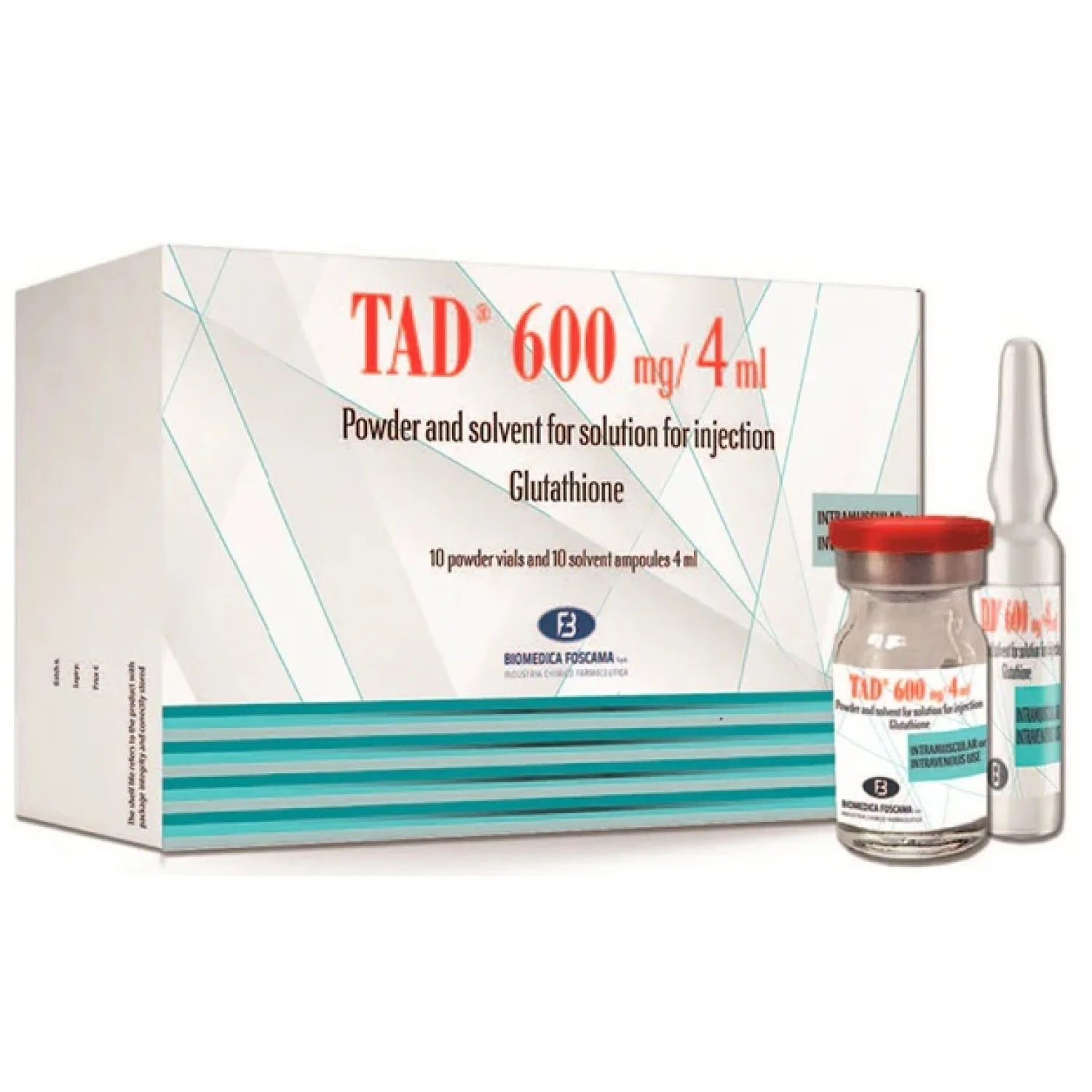
Description
What is TAD-600 (Glutathione)?
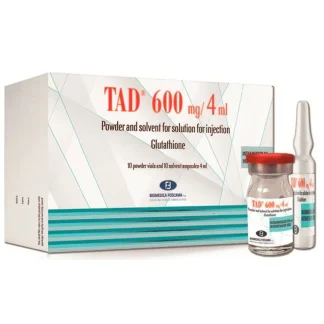
TAD-600 is a pharmaceutical glutathione, a powerful antioxidant that occurs naturally in the body. It is used in medical treatments to combat oxidative stress and detoxify the body. Glutathione plays a crucial role in protecting cells from damage by free radicals and toxins. Glutathione is a naturally occurring, highly potent antioxidant. When taking liver supplements like NAC, it works by increasing the body’s glutathione levels, which protects your organs from free radicals and toxins that can damage them. Direct intake of glutathione provides a much more effective dose. Glutathione is produced by the liver and is also found in fruits, vegetables, and meat. People take glutathione to treat cataracts and glaucoma, to prevent aging, to treat or prevent alcoholism, asthma, cancer, heart diseases (atherosclerosis and high cholesterol), hepatitis, liver diseases, diseases that weaken the immune system (including AIDS and chronic fatigue syndrome), memory loss, Alzheimer’s disease, osteoarthritis, and Parkinson’s disease. Glutathione is also used to maintain the immune system and to combat metal and drug poisoning. Glutathione is inhaled to treat lung diseases, including idiopathic pulmonary fibrosis, cystic fibrosis, and lung diseases in people with HIV. Healthcare providers administer glutathione via intramuscular injections to prevent the toxic side effects of cancer treatment (chemotherapy) and to treat male infertility. Healthcare providers also administer glutathione intravenously to prevent anemia in kidney patients undergoing hemodialysis, prevent kidney problems after heart bypass surgery, treat Parkinson’s disease, improve blood flow, and reduce clotting in people with atherosclerosis, treat diabetes, and prevent the toxic side effects of chemotherapy.
Mechanism of action
Glutathione works by neutralizing free radicals, thereby preventing cell damage. It also supports detoxification processes in the liver, helps in the metabolism of fats and proteins, and strengthens the immune system by regenerating other antioxidants such as vitamins C and E. Glutathione is a linear tripeptide with a sulfhydryl group, comprising L-glutamine, L-cysteine, and glycine. It plays an important role in protecting the body’s cells as a powerful antioxidant. In the human body, a deficiency of glutathione leads to many diseases such as Parkinson’s disease, tyrosinemia type I, alcohol poisoning, and others. In vivo and in vitro experiments have shown that a deficiency of glutathione can lead to mitochondrial damage and cell death caused by an increase in the number of toxic oxygen species, which leads to an increase in the number of free radicals. The neutralization system involving glutathione plays a unique role in building the body’s resilience to a variety of influences and is the cell’s most important protective mechanism. Glutathione binds a large number of lipophilic compounds (physical neutralization), thereby preventing their entry into the lipid layer of the membranes and disrupting cell functions. In this way, glutathione improves the stability of the cell membrane, protects the membrane of liver cells, increases the activity of enzymes and the liver, and promotes the detoxification and regenerative activity of the liver by destroying free radicals. Glutathione and COVID-19 Glutathione and COVID-19. The addition of glutathione to the treatment of severe COVID-19 can reduce life-threatening complications by restoring the effective function of the body’s defense systems, leading to a faster recovery and a milder disease course. Studies suggest that higher glutathione levels improve the body’s response to viral infections. Glutathione protects immune cells through its antioxidant properties and helps immune system cells function properly. It can suppress the replication of various viruses at different stages, which prevents the increased viral load and the massive release of inflammatory cells in the lungs (“cytokine storm”). A study by De Flora et al. showed that the preventive use of N-acetylcysteine (NAC, a precursor of glutathione) over six months significantly reduces the incidence of influenza and flu-like episodes, especially in older people at high risk. In conditions such as lung injury and inflammation in severe ARDS patients, a deficiency of reduced glutathione worsens lung damage due to oxidative stress and inflammation. This can be effectively treated with NAC, which also helps prevent coagulopathy in COVID-19 patients. An endogenous glutathione deficiency worsens oxidative lung damage caused by SARS-CoV-2, leading to severe symptoms such as acute respiratory distress syndrome, multiple organ failure, and death. People with glutathione deficiency are more susceptible to uncontrolled replication of SARS-CoV-2, leading to increased viral loads. COVID-19 patients with moderate to severe disease have lower glutathione levels, higher ROS levels, and a higher oxidative-reductive status (ROS/GSH ratio) than those with mild disease. A prolonged and severe COVID-19 infection in a patient with significant glutathione deficiency suggests that a glutathione deficiency correlates with increased viral replication and lung damage. Higher cellular glutathione levels lead to milder clinical symptoms and lower viral loads. Glutathione deficiency is an acquired condition associated with aging, male sex, comorbidities, and smoking. A reduced intake of fresh vegetables and fruits can also lead to a deficiency. SARS-CoV-2 poses a danger only to individuals with endogenous glutathione deficiency, regardless of the cause. This understanding provides new insights into the causes and mechanisms responsible for severe COVID-19 and supports the use of N-acetylcysteine and reduced glutathione for treatment and prevention. The antiviral effect of glutathione is nonspecific, suggesting that it is also active against SARS-CoV-2. Restoring glutathione levels in COVID-19 patients would be a promising treatment approach. Long-term oral administration of N-acetylcysteine has been tested as an effective preventive measure against respiratory viral infections. N-acetylcysteine is widely available, safe, cost-effective, and can be used off-label. The parenteral injection of reduced glutathione, which is more bioavailable than NAC, can be an effective therapy for severe COVID-19 cases.
Benefits of Glutathione
TAD-600 is indicated for various medical conditions, including:
- Liver diseases: Helps in the treatment of hepatitis and other liver diseases by detoxifying harmful substances.
- Cancer treatment: Used to mitigate the toxic side effects of chemotherapy and radiation therapy.
- Immune support: Improves the immune system, especially in conditions such as AIDS.
- Neurodegenerative diseases: Benefits patients with Parkinson’s disease and Alzheimer’s disease by reducing oxidative stress in the brain.
- Heart diseases: Helps in the treatment of atherosclerosis by improving blood flow and reducing blood clotting.
- Lung diseases: Effective in the treatment of lung diseases such as idiopathic pulmonary fibrosis and cystic fibrosis.
- Metabolic disorders: Helps in the treatment of diabetes and the prevention of associated complications.
- Male infertility: Used to improve sperm quality and treat infertility in men.
- General health: Supports overall health by preventing aging, improving memory, and maintaining cellular health.
Dosage and administration
TAD-600 is administered by healthcare professionals. The dosage and frequency depend on the specific condition being treated and the patient’s overall health. Typical administration includes intramuscular (IM) injection: For local treatment and slower absorption. After mixing the powder with the solvent, the medication should be used immediately. Storage in diluted form is not possible.
Side effects
Although TAD-600 is generally well tolerated, some possible side effects may include:
- Allergic reactions: Rash, itching, or swelling.
- Injection site reactions: Pain, redness, or swelling.
- Gastrointestinal problems: Nausea or vomiting.
- Headaches or dizziness.
Precautionary measures
- Allergies: Inform your doctor about any known allergies.
- Pregnancy and breastfeeding: Use under medical supervision.
- Chronic diseases: Patients with chronic illnesses should consult their doctor before starting treatment.
- Avoid concurrent use with sodium menadione bisulfite, cyanocobalamin, calcium pantothenate, sulfonamide preparations, and tetracyclines.
Storage
TAD-600 should be stored in a cool, dry place away from direct sunlight. The reconstituted solution should be used immediately to ensure efficacy and avoid contamination.
Composition
Each ampoule of TAD-600 contains 600 mg of reduced glutathione. The product is usually administered intravenously or intramuscularly.