Description
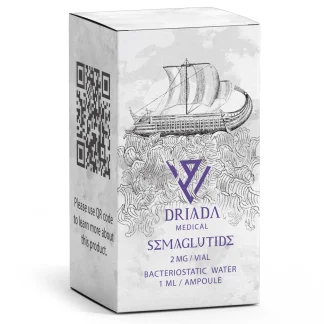
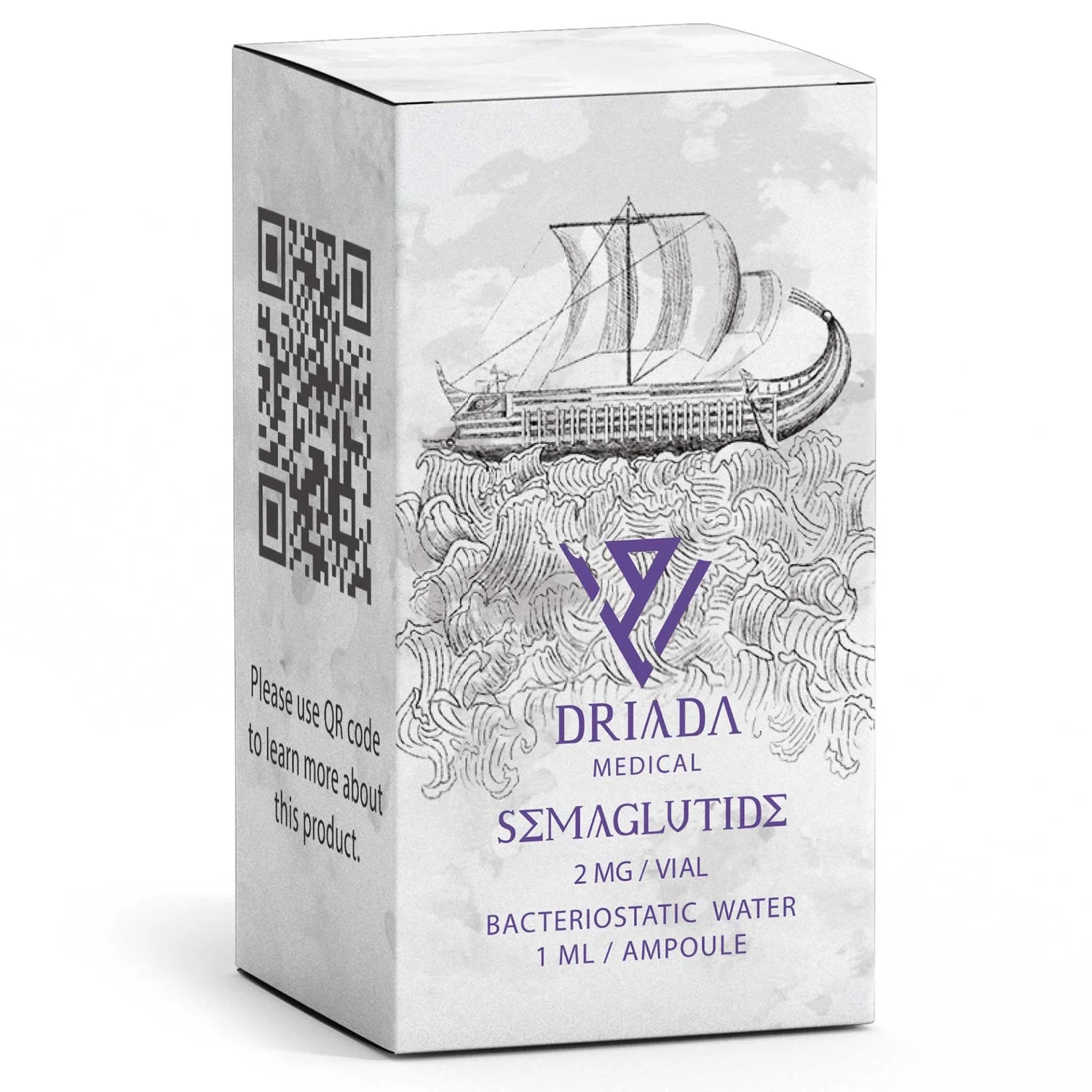
Semaglutide 2 mg Driada Medical Description
Semaglutide 2 mg Driada Medical is a glucagon-like peptide-1 (GLP-1) receptor agonist, which is produced by recombinant DNA biotechnology. Semaglutide is a GLP-1 analogue with 94% homology to human GLP-1. Semaglutide acts as a GLP-1R agonist that selectively binds to GLP-1R and activates it. GLP-1R serves as the target for native GLP-1.
Mechanism of action of Semaglutide 2 mg Driada Medical
GLP-1 is a physiological hormone with several effects on glucose regulation and appetite as well as on the cardiovascular system. The effect on glucose concentration and appetite is specifically conveyed by GLP-1R, which is located in the pancreas and in the brain. Pharmacological concentrations of semaglutide reduce blood sugar concentration and body weight by combining the effects described below. GLP-1Rs are also available in certain areas of the heart, blood vessels, immune system, and kidneys, where their activation can have cardiovascular and microcirculatory effects.
In contrast to native GLP-1, the extended half-life of semaglutide is about 1 week. You can use it once a week. Binding to albumin is the main mechanism for the long-term effect of semaglutide, which leads to reduced excretion via the kidneys and protects against metabolic breakdown. In addition, semaglutide is stable against cleavage by the enzyme dipeptidyl peptidase-4 (DPP-4).
Semaglutide lowers the blood sugar level by glucose-dependent stimulation of insulin secretion and suppression of glucagon secretion. In this way, insulin secretion is stimulated when the blood sugar concentration increases, and glucagon secretion is suppressed. The mechanism for reducing glycemic levels also includes a slight delay in gastric emptying in the early postprandial phase. During hypoglycemia, semaglutide reduces insulin secretion, but not glucagon secretion.
Semaglutide usage purpose
Semaglutide reduces total body weight and fat tissue by reducing energy intake. This mechanism includes a general decrease in appetite, including an increase in satiety signals and a decrease in hunger signals, as well as improved control of food intake and a reduction in cravings. Insulin resistance is also reduced, possibly due to weight loss. In addition, semaglutide reduces the preference for high-fat meals. It was shown in animal studies that semaglutide is absorbed by certain areas of the brain, increasing important satiety signals and weakening important hunger signals. Due to the effect on isolated areas of brain tissue, semaglutide activates neurons associated with satiety and suppresses neurons associated with hunger.
In clinical studies, semaglutide had a positive effect on plasma lipids, lowered systolic blood pressure, and reduced inflammation.
In animal experiments, semaglutide inhibits the development of arteriosclerosis by preventing the further development of aortic plaques and reducing inflammation in the plaques.
Compared to placebo, semaglutide reduced calorie intake during three daily meals by 18–35%.
Compared to placebo, semaglutide reduced fasting triglycerides and VLDL cholesterol by 12% and 21%, respectively. Postprandial spikes in triglycerides and VLDL cholesterol in response to a high-fat meal were reduced by more than 40%.
Semaglutide lowered glucose levels after the first dose.
How to use the medication
Semaglutide doses of 0.5 mg and 1 mg ensure sufficient exposure to the drug in the body weight range of 40 to 198 kg.
The initial dose is 0.25 mg once a week for the first 4 weeks. This gives your body the opportunity to get used to the medicine.
From week 5, you can increase the dose to 0.5 mg once a week.
The maximum dose is 2 mg once a week.
Administer an injection once a week, every week on the same day.
Positive effects
- Improves the function of the β cells of the pancreas.
- Reduces glucagon concentration
- Lowers high blood sugar levels
- Reduction of insulin resistance
- A significant reduction in mean systolic blood pressure
- Weight loss mainly due to loss of adipose tissue
Side effects
- Diarrhea
- Constipation
- Nausea
- Vomiting
- Abdominal pain
- Heartburn
- Belching
Warnings
Some side effects can be serious. If you experience any of these symptoms, call your doctor immediately or seek emergency medical treatment:
- Persistent pain that starts in the upper left or middle of the stomach but can spread to the back, with or without vomiting; itching; swelling of the eyes, face, mouth, tongue, or throat; difficulty breathing or swallowing; reduced urination; or swelling of the legs or ankles.
- Visual disturbances, fainting, or dizziness.
- Pain in the upper abdomen; yellowing of the skin or eyes; fever; clay-colored stools; rapid heartbeat.
How to prepare a solution with Semaglutide 2 mg Driada Medical
To prepare an injection solution, take a syringe that already contains a diluent and inject it into a vial with lyophilized powder. Tilt the vial so that the needle touches the vial wall. Avoid injecting the diluent directly into the lyophilized powder. The solvent should slowly flow down the wall of the vial (do not fill it all at once and take your time).
As soon as the entire diluent has been placed in the peptide vial, mix carefully (but do not stir or shake the vial) until the lyophilized powder has dissolved and you get a clear liquid. Now the drug is ready for use.
Never mix a peptide with another in the same syringe. There is a danger that fragile peptide molecules will be destroyed.
Application for Semaglutide 2 mg Driada Medical
Depending on personal preference, the injection can be administered subcutaneously or intramuscularly.
Injections
- Injections can be administered subcutaneously or intramuscularly with an insulin syringe.
- Disinfect the rubber cap of the medicine and the injection site with alcohol.
- Draw the medication into a syringe and inject it slowly.
Medication profile
- Half-life: 165 hours
- Frequency of administration: once a week
Contraindications
- Limit alcohol consumption while taking this drug, as it can increase the risk of hypoglycemia.
How to store?
- Store at a temperature of no more than 30 °C, or at a temperature of 2 °C to 8 °C (in the refrigerator) for up to 56 days.
- Do not freeze.
- Do not use semaglutide if it has been frozen.
- Keep away from children.
- Do not use after the expiry date.