Description
Lion’s Mane (Hericium erinaceus) – A Nootropic and Neuroprotector for Cognitive Enhancement, Brain Support, and Prevention of Neurodegenerative Diseases
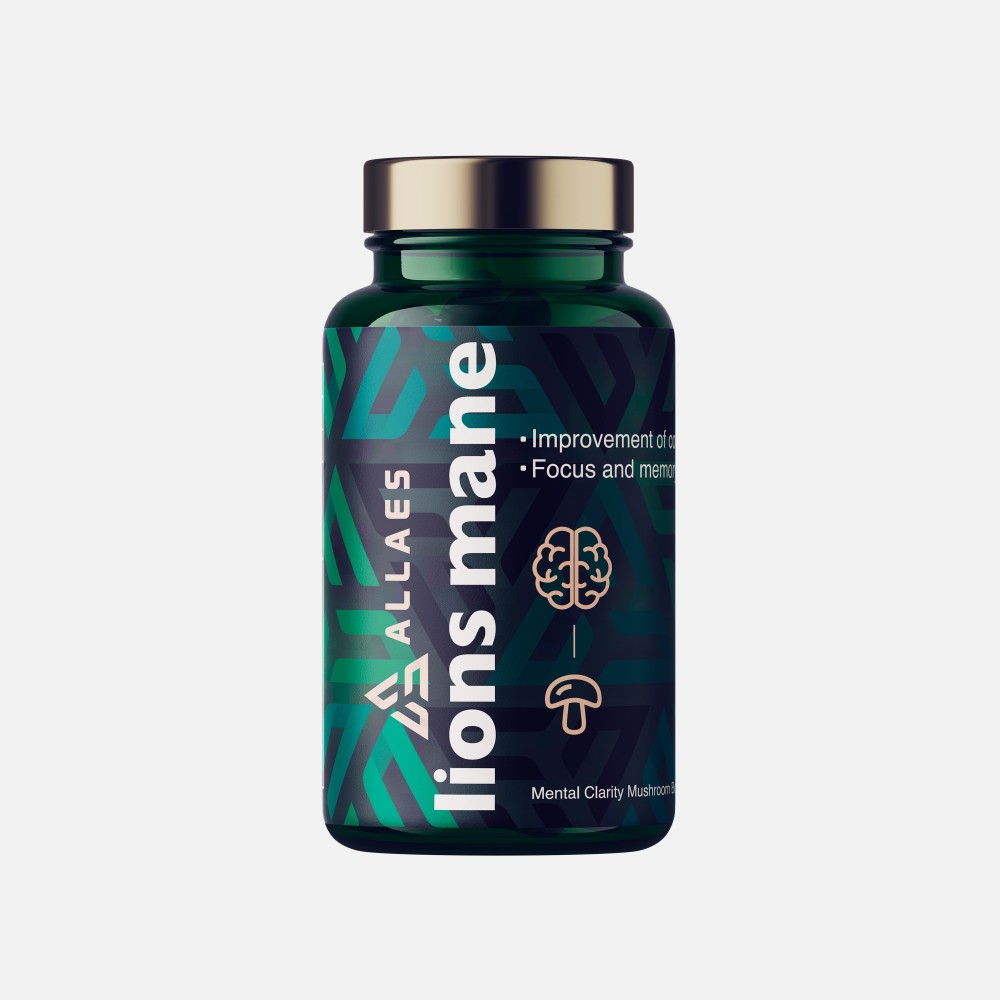
Lion’s Mane (Hericium erinaceus) is a unique mushroom with strong neuroprotective and nootropic properties, widely used in both traditional and scientific medicine. Its main effect is to stimulate the synthesis of NGF (nerve growth factor) – a crucial factor for the growth, repair, and protection of nerve cells. This makes Lion’s Mane ideal for supporting memory, concentration, emotional balance, and for slowing down age-related cognitive decline.
Lion’s Mane helps the brain adapt to stress, recover from overload, and maintain cognitive stability – even during chronic exhaustion or age-related changes. Its efficacy is supported by clinical studies and laboratory data, with evidence growing annually.
Who can benefit from Lion’s Mane?
✔ If you experience concentration problems, memory gaps, or brain fog – this supplement promotes neurogenesis, improves cognitive performance, and ensures mental clarity.
✔ If you suffer from chronic stress, anxiety, or emotional instability – Lion’s Mane supports brain health and stabilizes the nervous system.
✔ If you are recovering from a head trauma, stroke, or severe mental exhaustion – Lion’s Mane can accelerate the regeneration of nerve tissue.
✔ If you want to protect your brain from age-related decline – Lion’s Mane supports neuron health, improves memory, and can lower the risk of neurodegenerative diseases such as Alzheimer’s and dementia.
✔ If you engage in mentally demanding work or intensive studies – it can boost concentration, information processing, and learning ability.
✔ If you use psychoactive substances or PEDs – it helps maintain brain health, reduce neurotoxicity, and support cognitive recovery.
How does Lion’s Mane work?
The effect of Lion’s Mane is based on two unique groups of bioactive compounds – hericenones and erinacines. These substances can cross the blood-brain barrier and directly stimulate the production of NGF (nerve growth factor) – a protein essential for the growth, regeneration, and survival of neurons. By increasing NGF levels, Lion’s Mane activates neurogenesis, promotes the formation of new neuronal connections, and supports the healing of damaged nerve cells.
Additionally, it promotes the repair of the myelin sheath – the protective insulating layer around nerve fibers that ensures fast and precise signal transmission. Damage to the myelin sheath is associated with cognitive decline, chronic fatigue, and neurodegenerative diseases. Thanks to hericenones and erinacines, this mushroom also reduces pro-inflammatory cytokines, protects neurons from oxidative stress, and supports the balance of dopamine and serotonin, which has a positive effect on mood and learning ability.
Important: Lion’s Mane does not work like classic stimulants (e.g., caffeine). It does not force the brain into activity, but rather gently supports natural regeneration processes and contributes to the restoration of inner balance.
How to take Lion’s Mane correctly?
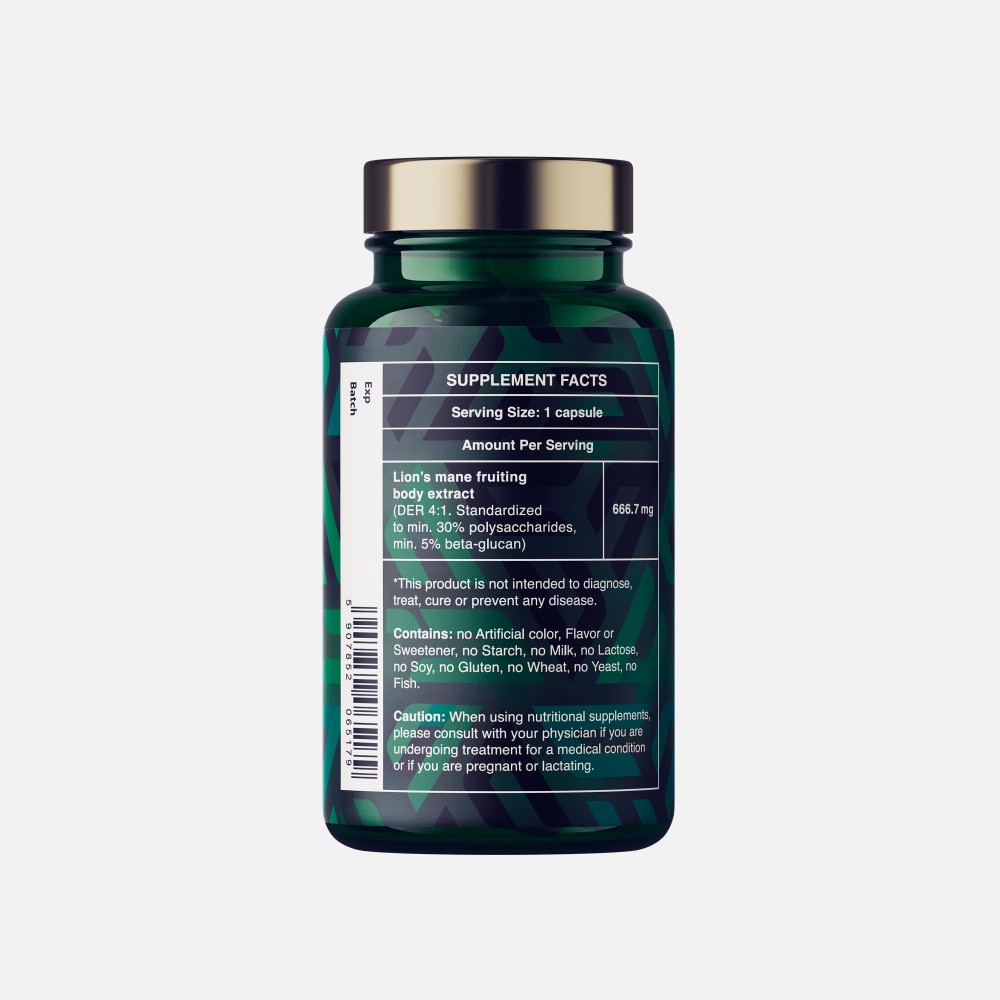
- Recommended dosage: 1–2 capsules per day (equivalent to 666–1333 mg of extract). This is the optimal range for promoting cognitive functions, memory performance, and nerve regeneration.
- Maximum dosage: Up to 3 g per day. Higher amounts are not considered dangerous, but are still little studied clinically. It is best to start with the lowest effective dose and observe your individual reaction.
- Best time to take: In the morning or during the day. If you tolerate Lion’s Mane well, you can also take it in the evening – most people do not report sleep disturbances, and some even report better sleep. It is best to test it during the day first and adjust if necessary.
- Recommended duration of intake: At least 4 weeks. Many users report noticeable effects after 8–12 weeks. Even long-term intake (up to 49 weeks) has shown no negative effects. It is advisable to take a break of 2–4 weeks after an intake cycle to maintain efficacy. The effect is cumulative – do not expect miracles after the first capsule. First changes usually occur after 1–2 weeks of regular intake.
Composition is crucial!
A quality feature of Lion’s Mane products is which part of the mushroom the extract comes from. Cheap products often contain mycelium cultivated on grain. Mycelium contains only minimal amounts of active ingredients, especially hericenones, and is often mixed with substrate residues – which leads to low biological efficacy.
In our product, we exclusively use extract from the fruiting body – not the mycelium. Only the fruiting body contains the crucial active ingredients for neurogenesis and NGF stimulation. We use a highly concentrated, substrate-free extract with a DER (Drug-Extract Ratio) of 4:1 – meaning 1 g of extract corresponds to 4 g of raw mushroom.
Furthermore, the extract is standardized: it contains at least 30% polysaccharides and 5% beta-glucans – the main active ingredients with nootropic, neuroprotective, and immunomodulatory effects. Standardization ensures that each capsule contains a consistent and reliable amount of active ingredients, without quality fluctuations.
What problems can Lion’s Mane alleviate?
Improves memory and cognitive performance
Lion’s Mane has a positive effect on memory, concentration, and cognitive flexibility – in both mildly cognitively impaired and healthy adults. It stimulates neurogenesis and strengthens neuronal connections, making it promising for the prevention of dementia and mental decline.
Reduces stress and anxiety, improves mood
It helps to reduce psychological stress and anxiety, and promotes emotional balance. It acts gently by supporting dopamine and serotonin regulation – neurotransmitters that are important for mood and stability.
Promotes neuronal regeneration and protects the brain
Lion’s Mane accelerates nerve regeneration, improves signal transmission in the brain, and supports remyelination. This makes it promising for neuroinflammation, recovery phases, and age-related neuronal decline.
Improves sleep quality and nighttime regeneration
It supports sleep structure, makes falling asleep easier, and deepens regenerative sleep phases. Additionally, it reduces nighttime inflammatory processes and increases the brain’s stress resistance during rest phases.
Strengthens the immune system and shows antitumor effects
In addition to cognitive effects, Lion’s Mane has immunomodulatory properties. It activates T-cells and macrophages, boosts antioxidant defenses, and even shows potential in tumor prevention.
Protects against neurodegeneration and lowers the risk of Alzheimer’s and Parkinson’s
In particular, erinacine A has a strong neuroprotective effect: it promotes the growth of nerve cells, reduces inflammation, protects against cell death, and improves neuronal signal transmission.
Benefits for PED users
Substances that act on the central nervous system – such as steroids, stimulants, thyroid hormones, or nootropics – place additional strain on the brain, cognitive performance, and emotional stability. Here, Lion’s Mane can serve as a gentle but effective support. It protects the brain, promotes mood control, lowers inflammation, and helps in recovery after prolonged medication use.
It is particularly useful for substances that can cause emotional instability or mood swings – e.g., Trenbolone (irritability, restlessness) or Clomid (possible depressive moods). In such cases, Lion’s Mane can help mitigate these effects and stabilize neuronal regulation.
It is also useful during PCT (Post-Cycle Therapy) – for example, in cases of decreased motivation, concentration problems, or general “brain fog”. During calorie deficits, fatigue, or mental overload, it helps maintain mental clarity, increase stress resistance, and improve neuronal resilience – which is especially relevant for substances that affect the dopaminergic system.