Description
Ashwagandha – A Scientifically Backed Adaptogen to Combat Stress, Fatigue, and Anxiety
Ashwagandha (Withania somnifera) is one of the most intensively studied plants, widely used in both medicine and sports, and known for its adaptogenic and neuroprotective properties. As an adaptogen, it helps the body better cope with physical and mental stress, recover from exertion, and maintain hormonal balance by lowering stress hormone levels while simultaneously supporting healthy testosterone levels – a hormone also crucial for the recovery process.
Ashwagandha offers numerous benefits that can improve the quality of life even in people without major health problems. It is a versatile supplement that supports overall well-being, helps maintain health and energy, and protects the body from the effects of stress, inflammation, and age-related changes. The effects of Ashwagandha are supported by scientific research, and the number of studies validating its benefits is growing daily.
Who can benefit from Ashwagandha?
✔ If you experience high stress, anxiety, or irritability – Ashwagandha can help lower cortisol levels and thereby improve your emotional state by relieving excess tension, helping you feel calmer and more relaxed.
✔ If you have sleep problems or insomnia – it can help you fall asleep faster and improve overall sleep quality.
✔ If you need to support healthy testosterone levels – Ashwagandha supports hormonal balance, which can provide an extra energy boost and improve strength.
✔ If you are physically active – it can promote endurance, accelerate recovery, and protect muscles from catabolism (breakdown).
✔ If you have high blood sugar or are prone to diabetes – Ashwagandha can improve insulin sensitivity and help lower blood sugar levels.
✔ If you want to support brain health and protect it from the aging process – its neuroprotective effects contribute to better memory performance and cognitive function.
✔ If you want to support your cardiovascular system – it can increase your VO2 max, which is the maximum amount of oxygen your body can take in and use per minute during intense physical activity.
How does Ashwagandha work?
Adaptogens are substances that help the body cope with stress without depleting its resources. You can think of them as a personal trainer for the nervous system: instead of simply “numbing” stress, they teach the body to respond to it more efficiently. Every day we are exposed to various stressors – physical, emotional, and mental – that stimulate the prolonged release of cortisol. Cortisol, our main “stress hormone,” rises, the heart beats faster, and energy is diverted to defense mechanisms. When stress becomes chronic, we eventually feel tired, irritable, and burnt out. This is where the adaptogenic properties of Ashwagandha come into play.
If the body is a complex mechanism, adaptogens act like “lubrication” that helps all parts function smoothly. Ashwagandha improves endurance, strengthens resistance to stress, supports better sleep and concentration, increases oxygen uptake capacity, strengthens the immune system, and even promotes longevity. It is particularly known for lowering cortisol levels, making it especially effective against chronic stress, anxiety, and insomnia. It helps you relax without causing drowsiness – on the contrary, it supports the body in staying energetic and balanced.
Difference from stimulants and sedatives
Adaptogens do not work like caffeine or other stimulants that simply provide a short-term energy boost. They do not force the body into a “forced mode,” but rather regulate its function so that you can adapt to stress better without overloading it. Adaptogens help normalize the body’s response: if your energy is too low, they help boost it; if it is too high and you are on the verge of a panic attack, they help you calm down. They work gently but effectively, and their benefits usually build up over time.
Unlike synthetic sedatives, Ashwagandha does not “shut down” the nervous system. Instead, it helps the body calm down naturally, without causing dependency or adverse side effects.
How to take Ashwagandha correctly?
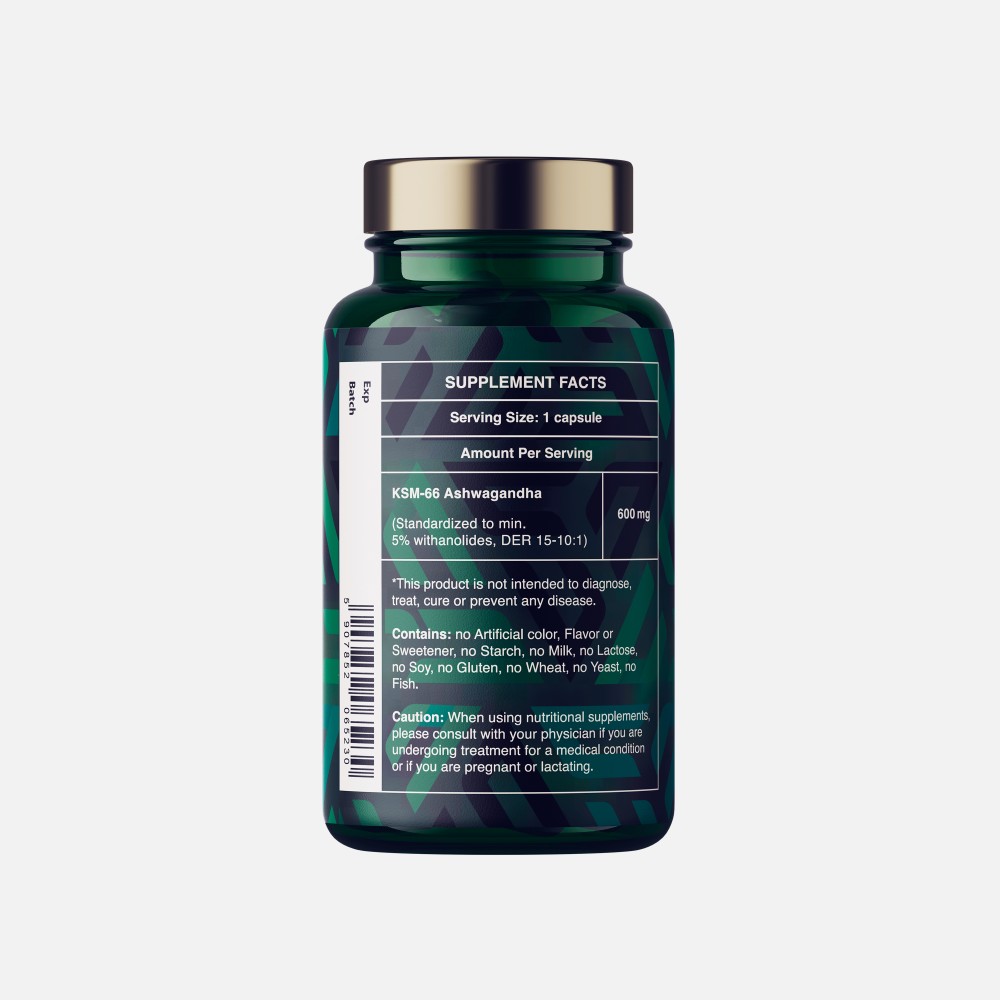
Studies have found no severe side effects at doses of up to 12 grams per day, but manufacturers generally recommend starting with 600 mg per day.
- Recommended dose: 600 mg per day.
- Maximum dose: Up to 3 g per day (depending on individual tolerance).
- Best time to take: Evening is preferable, as it promotes relaxation and improves sleep quality.
- How long to take: Adaptogens usually work gradually and cumulatively. Taking one capsule will not bring an immediate effect. However, with regular intake over at least 2–3 weeks, you may notice reduced anxiety, better sleep, and improved resilience to stress. Most recommendations suggest taking it consistently for at least 4–12 weeks for optimal results.
The composition is important!
As you may know, Ashwagandha is an herb, and one of the biggest challenges with plant-based raw materials is the variability in the content and concentration of active compounds. Due to a lack of quality standards, the composition and potency can vary significantly, making accurate dosing difficult and potentially reducing the efficacy of herbal products. However, we have solved this problem in our product.
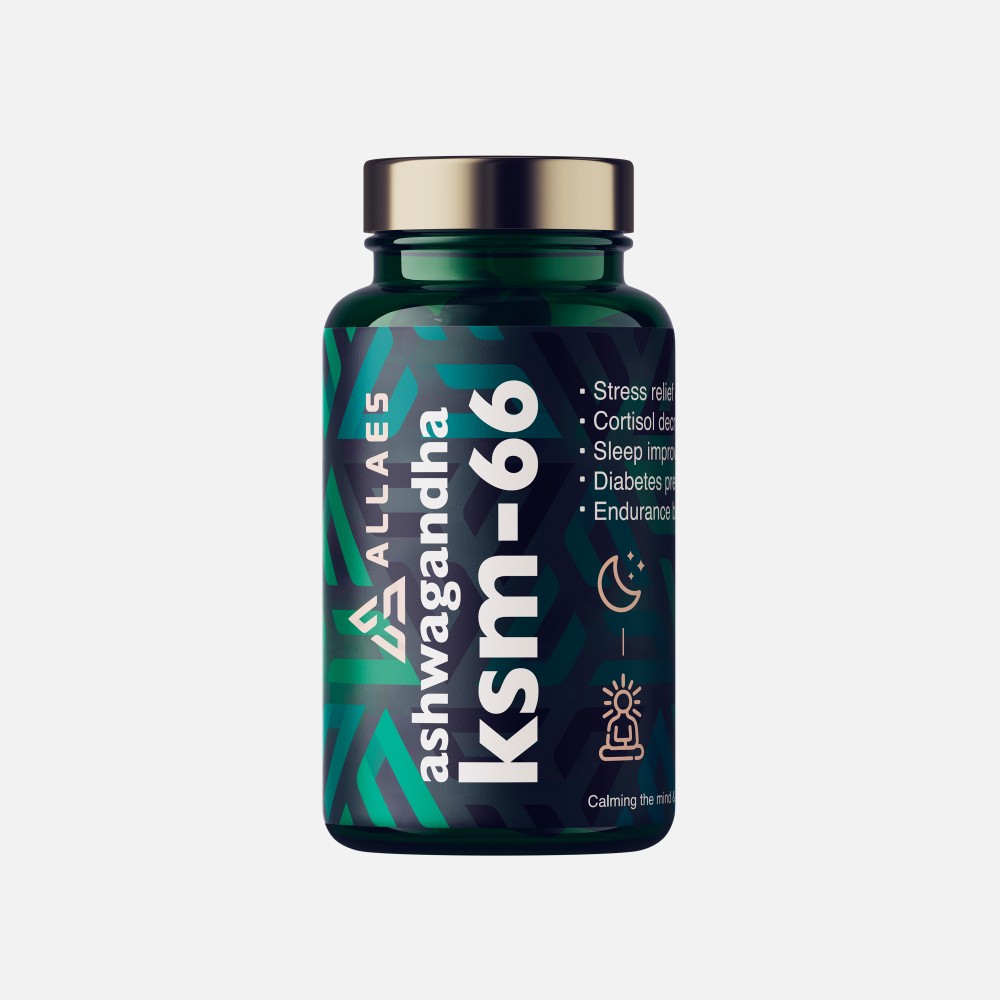
We use KSM-66® – the most well-known, clinically studied, and standardized Ashwagandha extract on the market, recognized for its superior quality and efficacy. It is produced using a unique, solvent-free extraction process that preserves all the important components of the plant and delivers a high, consistent concentration of active compounds such as withanolides.
What problems can Ashwagandha solve?
Reduces stress and anxiety, improves mood
Chronic stress leads to elevated cortisol levels, which causes irritability, anxiety, sleep problems, and fat accumulation in the abdominal area. Ashwagandha helps lower cortisol levels, promotes relaxation, stabilizes mood, and increases the body’s resilience to stressors.
Study: A 60-day intake of Ashwagandha lowered cortisol levels in people with chronic stress by 27.9%.
Improves sleep quality and combats oxidative stress
If you often wake up at night, take a long time to fall asleep, or do not feel rested, Ashwagandha can help. It increases GABA levels, reduces nighttime cortisol activity, and helps regulate the circadian rhythm – promoting faster sleep onset and deeper, more restful sleep.
Study: Ashwagandha improved sleep quality in people with chronic stress, extended sleep duration, and shortened the time it takes to fall asleep.
Boosts testosterone levels and improves athletic performance
In men, Ashwagandha stimulates testosterone production, improves fertility, libido, and recovery after physical exertion. It also helps women maintain the balance between estrogen and progesterone, making it useful for PMS, menopause, and reproductive health.
Study: Ashwagandha increased testosterone levels by 15% and improved LH and FSH markers in men.
Supports cardiovascular health and improves endurance
Ashwagandha helps lower blood pressure, reduce cholesterol levels, and promote overall heart health. In addition, it increases VO2 max – the maximum amount of oxygen the body can use during intense physical activity – which boosts endurance and accelerates recovery.
Study: Ashwagandha significantly increased VO2 max in athletes and less active individuals – a factor directly linked to long-term health and a lower risk of cardiovascular diseases.
Protects the brain from stress and aging, improves cognitive function
Chronic stress and oxidative damage accelerate brain aging by damaging neurons. Ashwagandha possesses neuroprotective properties that improve memory, concentration, and mental clarity while simultaneously lowering the risk of neurodegenerative diseases like Alzheimer’s and Parkinson’s.
Study: Ashwagandha reduced oxidative stress markers and improved cognitive function in patients with mild cognitive impairment.
Lowers blood sugar and improves insulin sensitivity
Elevated cortisol levels and chronic stress impair insulin sensitivity and promote the development of type 2 diabetes, weight gain, and metabolic disorders. Ashwagandha helps regulate blood sugar and improve the insulin response, especially in overweight individuals or people with prediabetes.
Study: Ashwagandha lowered blood sugar, improved HbA1c levels, and normalized the lipid profile in clinical trials.
Benefits for PED users
Good news for users of highly androgenic steroids – especially compounds like Trenbolone. Ashwagandha can actually reduce the anger outbursts, anxiety, and sleep problems that often accompany the use of such substances. Furthermore, it balances the cortisol spike caused by intense, high-frequency training, which otherwise contributes to fatigue, muscle breakdown, and systemic inflammation.
Ashwagandha dampens excessive cortisol secretion, accelerates recovery, reduces exhaustion, and helps preserve muscle mass. It also supports cardiovascular endurance and oxygen utilization – which is particularly beneficial when using compounds that increase red blood cell count and hematocrit.
The result? Faster regeneration, more stable emotions, deeper sleep, and greater resilience. Overall, this supplement is so effective and beneficial that you will feel its positive effects even while using PEDs, making it a cornerstone of a well-rounded post-cycle therapy (PCT) and health maintenance protocol.